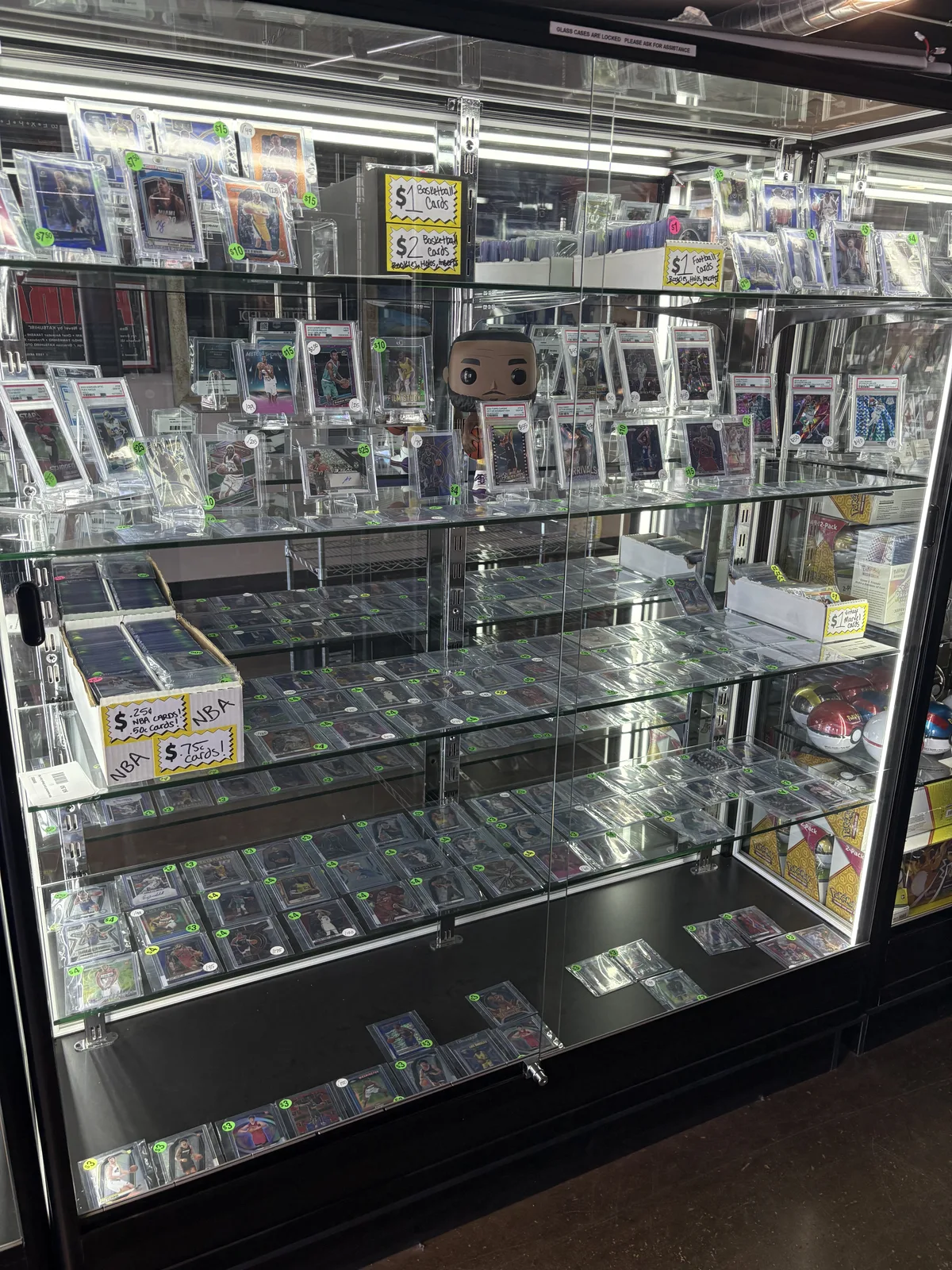
Most Denver collectors default to one of two moves when it's time to sell: drive a box of cards to the nearest shop, or start a slow slog of eBay listings. Neither is wrong, exactly — but they're also not the only options, and depending on what you're sitting on, they're often not the best ones. Here's the actual landscape, laid out honestly, including where a live Whatnot consignment fits in.
Editorial note: Business services, event schedules, and marketplace terms change. This guide links official pages and records the date they were checked.
First: consignment vs. a straight buyout
Before comparing venues, it's worth understanding the two different deals you'll actually be offered, because they're not the same thing.
A buyout means someone pays you cash today for full ownership of your cards. You get certainty and speed; they take on all the risk (and reward) of reselling them later — which is exactly why buyout offers run well below market value.
Consignment means you keep legal title to your cards while someone else — a shop, an auction house, or a live seller — handles the marketing and the sale. They take a commission once it actually sells; you take on the risk that it might take a while, in exchange for a bigger share of what it eventually goes for.
Almost every option below is one or the other. Knowing which is which changes what a "good deal" even looks like.
Local Denver shop buyouts
Denver has real depth here — this isn't a one-shop town. Bill's Sports Collectibles says it has served Denver since 1981, carries vintage and newer cards, and buys sports collectibles. Denver Card Shop publishes its current storefront and contact details, but its checked homepage does not publish buyout fees, accepted categories, or payment timing.
Inventory needs and buying policies can change quickly. Contact each shop for today's accepted categories, cash or store-credit offer, appointment requirements, and payment timing.
Mile High Card Company — the high-end route
For genuinely high-value vintage or rare autographed pieces, Mile High Card Company accepts single items or collections for review and describes both vintage-focused catalog auctions and quicker-moving, modern-focused Extra Innings auctions. Its official auction rules explain minimum bids, occasional reserves, and other buyer-facing terms; the consignor's commission and settlement details belong in the signed agreement.
Auction buyers consider their total cost, not only the hammer price, so compare the estimated net proceeds rather than one headline fee. MHCC says it markets to collectors in the United States and Europe, which can matter for a scarce, high-value piece. Ask for the current auction calendar, reserve policy, commission, and settlement schedule before consigning.
Mobile appraisal services
Mint City Cards lists Denver and Colorado Springs among its Colorado service areas and says its appraisals are free. Its mobile model may be convenient for an estate or large vintage collection you do not want to transport. Confirm collection fit, appointment availability, whether the proposal is a purchase or auction consignment, and payment timing directly.
Denver-area card shows
If you'd rather negotiate face-to-face with multiple dealers at once, Denver Card Shows publishes events at the National Western Livestock Center where collectors can buy, sell, and trade. Check the official ticket page for the next date, admission, parking, and vendor details rather than relying on an old schedule. Shows can be useful for comparing dealer interest in one trip, but they cost you time and involve one-on-one negotiation.
National digital platforms
Beyond Denver, national platforms are worth comparing even though they are not local. Fanatics Collect says it accepts slabs, raw cards, wax, and memorabilia for listing and sale; its official page advertises seller fees as low as 6% and 0% fees with FanCash payouts, so check eligibility and full terms before treating either rate as available to your submission. COMC offers Standard, Select, Elite, and eBay Auction service levels and says their processing fees are due before cards are added to an account and listed; its checked schedule also says submissions include 90 days of free storage. Compare current eligibility, shipping, processing, marketplace commission, cash-out, storage, and return charges before submitting.
Where live Whatnot consignment actually fits
Notice what's missing from every option above: none of them are a live auction with real bidding energy happening in real time. That's the gap Sports Card Hustle fills, and it's a genuinely different category from anything else on this list — not a replacement for Mile High Card Co. on a five-figure vintage grail, but a real option for the collections most people actually have.
Here's the honest comparison:
- Versus a local shop buyout: consignment ties your payout to the final sale instead of a dealer's up-front offer, but you wait for the sale and accept market risk.
- Versus Mile High Card Co.: we're not the venue for a single ultra-high-end piece that needs specialist auction reach. For full collections, modern hits, and mid-tier graded cards, ask both businesses for their current intake-to-sale timing before choosing.
- Versus national platforms like COMC or Fanatics Collect: we're local. You can drop cards off in person if you're in the Denver metro area, and qualifying collections may be eligible for pickup — something a mail-in national platform does not provide.
- Versus doing it yourself on eBay: you skip the photography, the listings, the customer service, and the shipping. We handle all of it.
Our split scales with value instead of a flat rate: the consignor receives 60% of Net Sale Price under $50, 75% from $50–$499.99, and 85% at $500 and above. Net Sale Price is the final hammer or sale price minus applicable platform fees. You pay to deliver cards to us; after a sale, we cover packaging materials and outbound shipping to the buyer. Full breakdown in our terms.
How to actually decide
Borrowing from how the pros triage a collection: sort what you have into rough tiers before you pick a venue.
- High-value vintage (pre-1980, $1,000+): worth a conversation with Mile High Card Co. for the auction reach.
- Modern graded slabs and full collections: this is squarely our lane — consign with us and ask for the current estimated show window. Our terms provide a 120-day initial consignment period, with exact timing dependent on show scheduling and inventory volume.
- Bulk raw commons and lower-value cards: a local shop buyout or a card show table is often the fastest way to turn them into cash without ingestion fees eating the value.
- Anything you're unsure about: send us a rundown. We'll tell you honestly whether it's a fit — including if it isn't.
Denver collectors have more real options than the two most people default to. Fill out the consignment form and we'll tell you where your specific collection actually fits.
For a nearby market comparison, see where to sell sports cards in Colorado Springs. If your decision comes down to the two largest online formats, compare Whatnot vs. eBay for sports cards.
Sources and update record
Official first-party sources checked September 7, 2026: Bill's Sports Collectibles, Denver Card Shop, Mile High Card Company consignment, Mile High Card Company auction rules, Mint City Cards service areas, Denver Card Shows, Fanatics Collect selling, and COMC fees. Each linked official page was accessible when reviewed. Sports Card Hustle fee, eligibility, handoff, shipping, payout, and timing details were checked against the current consignment terms, service-area policy, and Denver service page.
Next scheduled review: by December 6, 2026, or sooner if a listed business, event, platform, or Sports Card Hustle changes a fee, eligibility, service-area, shipping, payout, or timing term.
Frequently Asked Questions
Ready to sell what you've got?
Send us your cards and we'll price them, prep them, and sell them live on Whatnot — no upfront cost.
Consign Your CardsDenver Card Shows and Trade Nights: What's Actually Happening This Fall
A verified fall 2026 calendar of Denver and Front Range card shows, grading events, and recurring shop trade nights.
ResellingDenver UFC Card Consignment: A Day in the Life
How a Denver card-show conversation became a UFC sports card consignment deal, from collection review to a live Whatnot auction.